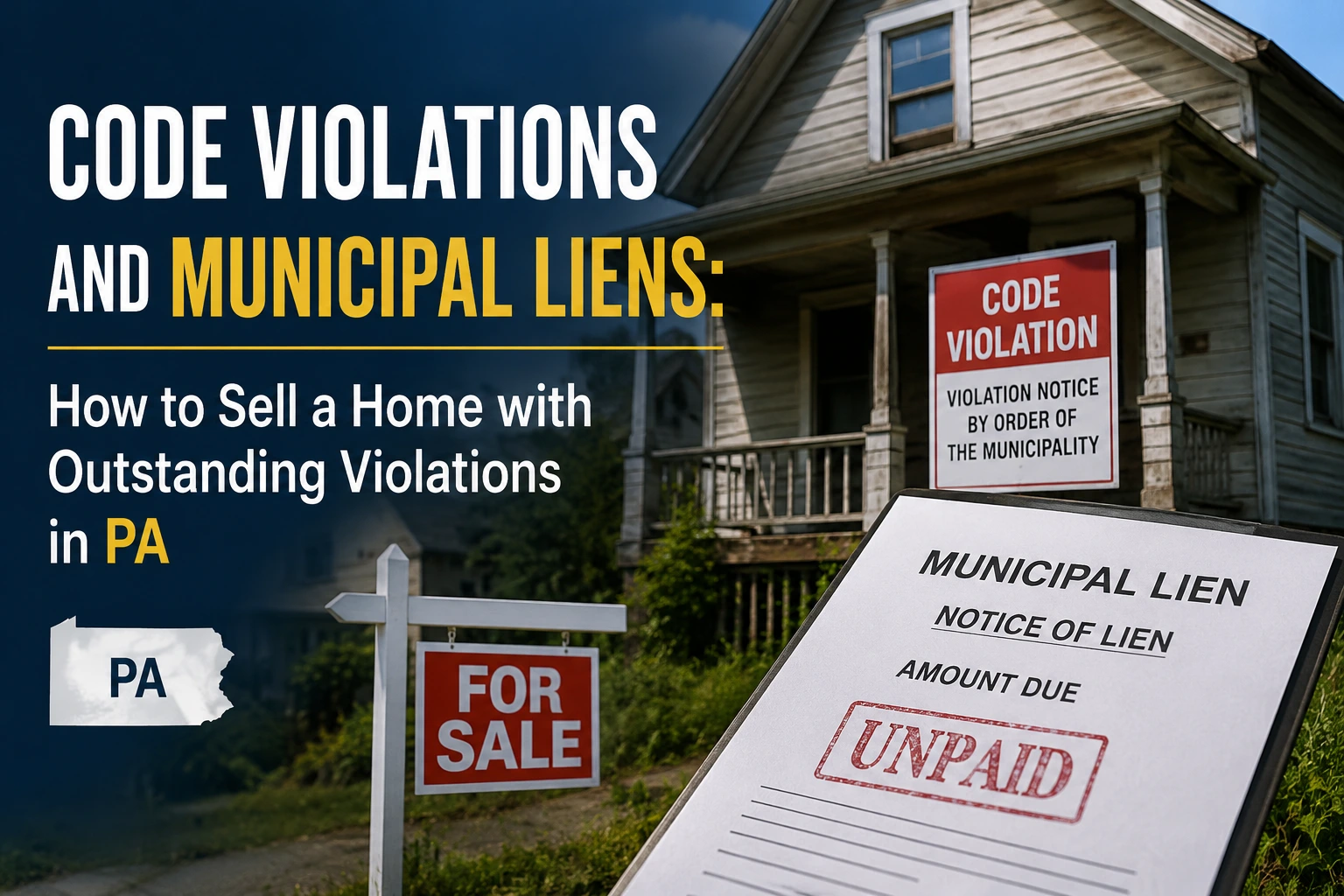
The letter from the city arrived months ago. Maybe it was about the unpermitted deck your previous owner built. Maybe it’s the exterior maintenance violations that accumulated while you were dealing with health issues. Maybe it’s the rental license violations on a property you inherited and never intended to manage.
Whatever the violation, you know you have a problem. The city wants compliance. Compliance means repairs you can’t afford—often $10,000, $20,000, or more. Every month you delay, fines accumulate and the lien against your property grows. You want to sell and walk away, but you’re told no one will buy a house with outstanding code violations.
Here’s the reality: properties with code violations sell every day in Pennsylvania. They just don’t sell through traditional channels to traditional buyers. Cash buyers like ROI National specialize in purchasing homes with violations, liens, and compliance issues—handling the municipal bureaucracy so you don’t have to.
This guide explains how code violations work in Pennsylvania, why they make traditional sales difficult, and how to sell your property and move forward despite outstanding violations and municipal liens.
What You’ll Learn
- What Are Code Violations and How Do They Happen?
- Common Types of Code Violations in Pennsylvania
- How Violations Become Municipal Liens
- The True Cost of Code Violations
- Why Traditional Home Sales Fail with Violations
- Your Options for Selling a Property with Violations
- The Cash Buyer Advantage for Violation Properties
- What Happens to Violations After You Sell
- Philadelphia L&I Violations: Special Considerations
- Why PA Homeowners Choose ROI National
- Frequently Asked Questions
- Next Steps
What Are Code Violations and How Do They Happen?
Code violations occur when a property doesn’t meet local building codes, housing codes, or municipal ordinances. In Pennsylvania, code enforcement is handled at the municipal level—meaning Philadelphia, individual Bucks County townships, and other municipalities each have their own enforcement processes.
Violations typically happen through:
Neighbor Complaints: Someone reports overgrown grass, exterior deterioration, noise, or suspicious activity. An inspector investigates and finds violations.
Routine Inspections: Rental properties require periodic inspections in many Pennsylvania municipalities. Inspectors discover unpermitted work, safety hazards, or maintenance issues.
Permit Investigations: You or a previous owner did work without proper permits. When discovered—often during a sale attempt—the municipality issues violations requiring the work be brought to code or removed.
Property Transfers: Some municipalities require inspections before or after property sales. New violations are discovered and become the new owner’s problem.
Proactive Enforcement Sweeps: Municipalities periodically target neighborhoods for code enforcement, inspecting multiple properties and issuing violations.
The Accumulation Problem:
Code violations rarely stay small. An initial violation for peeling exterior paint might lead to an inspection that discovers unpermitted electrical work, an outdated heating system, missing smoke detectors, and structural concerns. What started as one violation becomes a list of 10 or 20 compliance items, each requiring remediation.
Common Types of Code Violations in Pennsylvania
Understanding what type of violation you’re dealing with helps determine your options.
Exterior Property Maintenance Violations
- Peeling or deteriorated exterior paint
- Damaged or missing siding, gutters, or downspouts
- Roof damage or deterioration
- Broken or boarded windows
- Damaged porches, steps, or railings
- Overgrown vegetation or debris accumulation
- Abandoned vehicles or junk on property
- Damaged or leaning fences
Typical remediation cost: $2,000-$25,000+ depending on scope
Structural and Building Code Violations
- Foundation cracks or structural instability
- Load-bearing walls removed without permits
- Floor, ceiling, or wall damage
- Unpermitted additions or conversions
- Basement or attic conversions without proper egress
- Deck or porch structural deficiencies
Typical remediation cost: $5,000-$75,000+ depending on severity
Electrical Code Violations
- Unpermitted electrical work
- Outdated electrical panels (especially Federal Pacific or Zinsco)
- Knob-and-tube wiring in active use
- Insufficient outlets or improper wiring
- Missing GFCI protection in wet areas
- Exposed wiring or junction boxes
Typical remediation cost: $3,000-$20,000+ for panel replacement or rewiring
Plumbing Code Violations
- Unpermitted plumbing work
- Cross-connections or backflow issues
- Improper venting
- Lead service lines or lead solder
- Non-functional fixtures required by code
- Sewer line damage or improper connections
Typical remediation cost: $2,000-$15,000+ depending on scope
Fire Safety and Habitability Violations
- Missing or non-functional smoke/carbon monoxide detectors
- Blocked egress routes or windows
- Missing or damaged handrails
- Heating system deficiencies
- Mold or moisture issues
- Pest infestations
- Lead paint hazards (especially in pre-1978 homes)
Typical remediation cost: $500-$30,000+ depending on issue
Permit and Licensing Violations
- Work done without required permits (additions, renovations, HVAC, electrical, plumbing)
- Expired or lapsed rental licenses
- Certificate of occupancy violations
- Zoning violations (residential use in commercial zone or vice versa)
- Illegal rental units or conversions
- Home occupation violations
Typical remediation cost: Varies wildly—sometimes just permit fees ($500-$2,000), sometimes requiring work be brought to current code ($10,000-$50,000+) or even removed
How Violations Become Municipal Liens
Unpaid code violation fines don’t just disappear. In Pennsylvania, municipalities can convert unpaid fines and remediation costs into liens against your property.
The Typical Progression:
- Notice of Violation: You receive written notice identifying the violation and a deadline for compliance (typically 10-30 days, sometimes longer for major work).
- Failure to Comply: If you don’t fix the violation or request an extension/appeal by the deadline, daily fines begin accumulating. In Philadelphia, fines can be $150-$300+ per day per violation.
- Continued Non-Compliance: Fines continue accumulating. The municipality may perform emergency repairs (boarding up, grass cutting, demolition of hazards) and bill you for the cost.
- Municipal Lien Filed: Unpaid fines and remediation costs are filed as a lien against your property with the county recorder. This becomes part of your property’s title.
- Interest and Penalties: Liens typically accrue interest (often 6-10% annually) plus collection fees and penalties.
- Potential Consequences: Liens must be satisfied before property can transfer with clear title. In extreme cases, municipalities can pursue sheriff’s sale for severely delinquent properties.
The Compounding Problem:
A $500 violation can become a $15,000+ lien within a year when daily fines, emergency remediation costs, legal fees, and interest compound. We’ve seen properties where the accumulated liens exceed the property’s value—making traditional sale impossible.
Example Lien Accumulation:
- Initial violation: Exterior maintenance (peeling paint, damaged gutter)
- Remediation deadline: 30 days
- Homeowner fails to comply (couldn’t afford repairs)
- Daily fine: $150/day
- After 6 months: $27,000 in fines alone
- Plus: Interest, legal fees, and any municipal remediation costs
- Total lien: $30,000-$40,000+ on a property that needed $5,000 in repairs
The True Cost of Code Violations
Code violations cost far more than just the remediation work. Understanding the full financial picture helps you make informed decisions.
Direct Costs:
- Remediation/repair costs: $2,000-$75,000+ depending on violations
- Permit fees: $200-$2,000+ per permit
- Professional inspections: $300-$1,000+
- Licensed contractor premiums (many municipalities require licensed contractors for violation remediation): 20-40% markup over handyman rates
- Re-inspection fees: $100-$500+ per visit
Accumulated Penalties:
- Daily fines: $50-$300+ per day per violation
- Interest on liens: 6-10% annually
- Collection fees: 10-25% of outstanding balance
- Court costs (if municipality pursues legal action): $500-$5,000+
- Attorney fees (if you need to defend or appeal): $2,000-$10,000+
Indirect Costs:
- Lost sale opportunities (buyers walk away when they learn of violations)
- Extended carrying costs while resolving violations
- Reduced property value (even after remediation, some stigma remains)
- Stress and time managing the compliance process
The Catch-22:
Many homeowners facing code violations can’t afford the repairs—that’s often why the violations exist in the first place. But every day they can’t afford repairs, fines accumulate, making the problem worse. It’s a spiral that traps people in properties they can’t fix and (they think) can’t sell.
Why Traditional Home Sales Fail with Violations
Traditional home sales depend on buyers who can get conventional financing. Code violations create multiple barriers to that process.
Lender Requirements:
Banks and mortgage lenders require properties to meet minimum habitability and safety standards. Open code violations—especially for structural, electrical, plumbing, or safety issues—typically mean the lender won’t approve the loan. No loan, no sale.
FHA and VA loans have even stricter requirements. Properties must pass specific appraisal standards, and any health or safety violations will cause automatic rejection.
Title Issues:
Municipal liens appear on title searches. Title insurance companies won’t insure properties with unresolved liens. Without title insurance, lenders won’t lend and most buyers won’t buy. The liens must be satisfied (paid in full) before clear title can transfer.
Buyer Concerns:
Even if financing weren’t an issue, most retail buyers don’t want properties with violation histories. They worry about hidden problems, future enforcement, and the complexity of dealing with municipal bureaucracy. Properties with violations carry stigma that reduces buyer interest and sale prices.
Inspection Failures:
Home inspections reveal code violations to buyers who might otherwise proceed. Once a buyer’s inspector identifies unpermitted work or code deficiencies, they typically demand remediation, price reductions, or walk away entirely.
Disclosure Requirements:
Pennsylvania’s seller disclosure law requires you to disclose known defects, including code violations. You can’t hide violations and hope buyers don’t notice. Failure to disclose can result in legal liability after the sale.
The Result:
Properties with active code violations and municipal liens essentially can’t sell through traditional channels. You can list them, but financed buyers can’t buy them. The only traditional path is resolving all violations first—which requires the money you’re trying to get from the sale.
Your Options for Selling a Property with Violations
When you have code violations and want to sell, you have several paths forward. Each involves trade-offs.
Option 1: Resolve Violations, Then Sell Traditionally
How it works: Complete all required remediation, pay all fines and liens, obtain compliance certificates, then list the property traditionally.
Timeline: 3-12+ months for remediation (depending on scope) + 3-6 months for traditional sale
Cost: Full remediation costs + accumulated fines/liens + carrying costs during the process + agent commissions
Pros: Potentially highest sale price once property is code-compliant
Cons: Requires significant upfront capital you may not have. Violations continue accumulating during remediation. Permits and inspections can reveal additional issues. Process is stressful and time-consuming.
Best for: Homeowners with resources to fund remediation and time to manage the process
Option 2: Negotiate Violation Remediation into Traditional Sale
How it works: Find a buyer willing to purchase despite violations. Use sale proceeds (held in escrow) to pay liens at closing.
Reality check: This rarely works. Buyers who need financing can’t buy properties with active violations. Cash buyers willing to navigate this complexity expect significant discounts—at which point, you’re essentially doing a cash sale with extra steps.
Pros: Theoretically avoids upfront remediation costs
Cons: Very difficult to find qualified buyers. Liens must still be paid at closing, reducing proceeds. Buyer may demand remediation escrow or price reductions anyway.
Option 3: Request Municipal Payment Plan or Settlement
How it works: Negotiate with the municipality to reduce accumulated fines, waive penalties, or establish a payment plan that makes remediation feasible.
Reality check: Some municipalities will negotiate, especially if you demonstrate good faith effort to comply. Philadelphia has occasionally offered amnesty programs. But negotiations take time, and success isn’t guaranteed.
Pros: May reduce total cost. Shows good faith. Can make remediation affordable.
Cons: Time-consuming. No guarantee of success. You’re still responsible for actual remediation work, just with lower fines.
Option 4: Sell to a Cash Buyer Who Handles Violations
How it works: Sell to a cash buyer like ROI National who specializes in properties with violations. The buyer purchases the property, liens are satisfied from proceeds at closing (or buyer assumes responsibility depending on situation), and buyer handles all remediation after closing.
Timeline: As fast as 7-14 days
Cost: No out-of-pocket costs. Liens satisfied from proceeds. No agent commissions.
Pros: Speed—stops fine accumulation immediately. No upfront capital needed. No dealing with municipal bureaucracy. No remediation responsibility. Certainty of closing.
Cons: Lower sale price than a code-compliant property would bring. Liens reduce net proceeds.
Best for: Homeowners who can’t afford remediation, properties where liens are significant, anyone who wants out without managing the compliance process
The Cash Buyer Advantage for Violation Properties
Cash buyers like ROI National have distinct advantages when purchasing properties with code violations:
No Financing Requirements: We don’t need bank approval to purchase. No appraisal requirements, no lender habitability standards. We buy properties banks won’t finance.
Experience with Municipal Processes: We’ve purchased hundreds of properties throughout the Philadelphia area, many with violations. We know how L&I works, how to negotiate with municipalities, and how to efficiently resolve violations after closing.
Lien Resolution Expertise: We work with title companies experienced in municipal liens. We know how to clear title, satisfy liens at closing, and handle the paperwork that intimidates individual sellers.
We Stop the Bleeding: Every day you own the property, fines may be accumulating. A fast cash sale stops that accumulation immediately. The sooner we close, the less you lose to fines.
We Assume the Risk: Remediation costs are uncertain. Permits can reveal additional issues. We take on that risk, factoring it into our offer. You know exactly what you’re getting at closing—no surprises.
We Handle the Remediation: After closing, we manage the entire compliance process: contractors, permits, inspections, municipal communications. You’re done with it.
How It Works:
- You contact us and tell us about your property and violations.
- We research the violations, pulling municipal records to understand the full scope of liens and compliance requirements.
- We evaluate the property and provide a cash offer that accounts for violations, liens, and remediation costs.
- At closing, liens are satisfied from proceeds (or we work out an arrangement depending on the situation). Title transfers.
- After closing, we handle all remediation and compliance. The property is no longer your responsibility.
What Happens to Violations After You Sell
A common question: are you still responsible for violations after selling? Here’s how it works:
Liens Transfer with Property:
Municipal liens attach to the property, not to you personally (in most cases). When the property sells, liens are typically satisfied from sale proceeds at closing. If proceeds aren’t sufficient, the buyer may negotiate to assume remaining obligations—but that’s rare and requires specific agreement.
Violation Responsibility:
Once you no longer own the property, you’re generally not responsible for achieving compliance. The new owner inherits the obligation to remediate. Some exceptions exist for specific violation types or if personal guarantees were signed, but for most residential property sales, the obligation transfers.
Criminal vs. Civil Liability:
Most code violations are civil matters—fines and liens, not criminal charges. However, certain severe violations (dangerous conditions, repeated willful non-compliance) can potentially involve criminal liability. Selling the property doesn’t necessarily shield you from criminal liability for conditions during your ownership, though such prosecutions are rare for typical residential violations.
Clean Break:
When you sell to ROI National, we handle the violations going forward. You receive your proceeds (after lien satisfaction), sign the deed, and walk away. The property’s compliance becomes our responsibility.
Philadelphia L&I Violations: Special Considerations
Philadelphia’s Department of Licenses and Inspections (L&I) is one of the most active code enforcement agencies in Pennsylvania. If your property is in Philadelphia, you’re dealing with a distinct system.
L&I Enforcement:
Philadelphia L&I handles building permits, code enforcement, rental licensing, and property maintenance. Violations can originate from multiple divisions, and a single property can have violations from several sources simultaneously.
Common Philadelphia L&I Issues:
- Rental license violations (operating without license, expired license, failure to register)
- Unpermitted construction (additions, conversions, major renovations)
- Exterior maintenance violations (the “Clean and Seal” program)
- Unsafe structure declarations
- Lead paint violations (particularly in pre-1978 properties with children)
- Fire code violations
- Zoning violations
Philadelphia’s Daily Fines:
Philadelphia imposes daily fines that accumulate rapidly. For example, operating a rental without a license can result in $300/day fines. A property operating unlicensed for six months can accumulate $54,000 in fines alone—before any remediation costs.
The Philadelphia Lien Process:
Philadelphia files liens against properties with unpaid violations. These appear in title searches and must be addressed for property transfer. The City also uses the tax lien sale process, potentially selling liens to private investors who then pursue collection.
Philadelphia Specific Programs:
Philadelphia occasionally offers amnesty or settlement programs for certain violation types. The Basic Systems Repair Program (BSRP) and other city programs sometimes help with remediation costs for qualifying homeowners. However, these programs have limited funding and specific eligibility requirements.
Our Philadelphia Experience:
ROI National has extensive experience with Philadelphia L&I. We’ve purchased properties with significant L&I violation histories, navigated the lien satisfaction process, and successfully achieved compliance post-purchase. We understand the system and factor it appropriately into our offers.
Why PA Homeowners Choose ROI National
When code violations and municipal liens have trapped you in a property you can’t fix and think you can’t sell, ROI National provides a way out. Here’s why homeowners throughout Pennsylvania trust us:
We Buy Properties with Violations: While others run from code violations, we specialize in them. L&I violations, municipal liens, unpermitted work, condemned properties—we’ve purchased them all.
We Know the System: Our team understands Pennsylvania municipal code enforcement, lien processes, and remediation requirements. We navigate the bureaucracy efficiently because we’ve done it hundreds of times.
We Stop Fines from Accumulating: Daily fines are bleeding you. A fast sale stops that immediately. The sooner we close, the more you preserve.
We Buy As-Is: You don’t fix anything. No remediation before sale. No permits to pull. No inspections to pass. We take the property with all its violations.
We Handle Liens at Closing: Municipal liens are satisfied from proceeds. We work with experienced title companies who know how to clear these titles.
No Out-of-Pocket Costs: You don’t pay for repairs, permits, or compliance. You don’t pay agent commissions. You don’t pay closing costs. Everything comes from proceeds or is our responsibility.
Speed: We can close in as little as 7-14 days. For properties with accumulating daily fines, speed means savings.
Local Expertise: Based in Southampton, Bucks County, we serve all of the Philadelphia metro area. We know L&I, we know township code enforcement, we know the local processes.
10+ Years, 500+ Homes: Since 2015, we’ve purchased over 500 properties throughout the tri-state area, many with violations and liens. Our 50+ verified Google reviews (4.9+ rating) reflect our commitment to fair, professional transactions.
Frequently Asked Questions
Can I really sell my house with open code violations?
Yes. While traditional financed buyers typically can’t purchase properties with active violations, cash buyers like ROI National specialize in these properties. We purchase homes with violations, handle lien satisfaction at closing, and manage remediation after the sale.
Will the liens eat up all my equity?
It depends on the liens versus your equity. We’ll research all liens before making an offer so you know exactly what you’ll net. In some cases, liens are substantial but equity remains. In severe cases where liens exceed equity, we can discuss options including potential lien negotiations.
How fast can you close on a property with violations?
We can close in as little as 7-14 days for straightforward situations. Complex lien situations may require additional title work, but we move as quickly as possible—every day of delay can mean additional fines.
Do I have to fix anything before selling?
No. We buy properties as-is with all violations. You don’t pull permits, hire contractors, or achieve compliance. We handle everything after closing.
What if I owe more in liens than my house is worth?
This is challenging but not impossible. We can sometimes negotiate with municipalities to reduce liens or work out arrangements. Contact us to discuss your specific situation—there may be options you’re not aware of.
Am I still liable for violations after I sell?
Generally, no. Liens attach to the property, not you personally. Once the property transfers and liens are satisfied, the new owner assumes responsibility for achieving compliance. There are narrow exceptions for certain severe violations, but for typical residential code violations, you’re clear after closing.
What types of violations do you handle?
All types: exterior maintenance, structural, electrical, plumbing, fire safety, unpermitted work, rental license violations, zoning issues, condemned properties, L&I violations—we’ve seen and purchased them all.
Will you help me understand what violations I have?
Yes. We research municipal records as part of our evaluation. We’ll help you understand the full scope of violations and liens before you make any decisions.
What areas do you serve?
We buy properties throughout the Philadelphia tri-state area: 8 Pennsylvania counties (including Philadelphia, Bucks, Montgomery, and Delaware), 14 New Jersey counties, and all of Delaware.
How do you determine your offer on a property with violations?
We evaluate the property’s value, subtract estimated remediation costs, subtract outstanding liens, and factor in the risk and complexity. Our offer reflects what makes the purchase viable for us while providing fair value to you.
Next Steps: Get Your Free Cash Offer
Code violations create a trap: you can’t afford to fix the property, but you think you can’t sell it either. Meanwhile, daily fines accumulate, liens grow, and the problem gets worse. The longer you wait, the less equity you’ll have left.
But the trap isn’t as airtight as it seems. Cash buyers exist specifically to help homeowners in your situation. We buy properties with violations. We handle the liens. We manage the remediation. You get out from under a property that’s draining your finances and peace of mind.
ROI National has helped hundreds of Philadelphia-area homeowners escape code violation nightmares. We know the municipal processes, we have relationships with title companies experienced in lien satisfaction, and we move fast to stop fines from accumulating.
Ready to explore your options? Contact ROI National today for a free, confidential consultation. Call 215-395-8011 (available 7 days a week), fill out our online form at roinational.com, or email info@roinational.com.
Here’s what happens: We’ll discuss your property and violation situation. We’ll research the liens and violations. Within 24-48 hours, you’ll have a cash offer that accounts for everything. You can accept, decline, or use it to evaluate your options—no pressure, no obligation.
Your property doesn’t have to be a trap. Let’s find you a way out.
About the Author
Allen Leyman is a Principal and Licensed Real Estate Professional at ROI National, headquartered in Southampton, PA (Bucks County). With over 10 years of experience in real estate investment and cash home buying across Pennsylvania, New Jersey, and Delaware, Allen specializes in purchasing properties with complex issues including code violations, municipal liens, and L&I compliance challenges. He and the ROI National team have purchased over 500 properties throughout the tri-state area, many with significant violation histories. Allen understands the stress of code enforcement situations and takes pride in helping homeowners find solutions when traditional options aren’t available.